


I prescribed 5 different treatments. Only 1 fades dark spots at the root.


You wake up, you go to the bathroom, see yourself in the mirror and there they are.
The dark spots on your cheeks, the spots on the back of your hands, or the uneven tone across your chest that you now cover without even thinking about it.
In my years of practice I have had countless women come into my clinic and say the same sentence.
I have been in the sun for years, I have tried everything, serums, creams, SPF every day, and none of it helps. Can we do an IPL?
Patricia, 61
My old self would have said yes, because every IPL treatment means good revenue.
I cannot do it anymore with the knowledge I have now. So here are the five most used approaches, ranked not by raw power but by what I actually recommend to a woman who has already faded the same spot twice. I have put my first choice at the top and worked down to my last.

First, understand what is actually making the spots
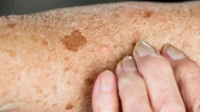
Your skin has been exposed to sun your entire life, most of it long before any of us wore SPF, and that leaves melanocytes locally overactive. A melanocyte is a pigment factory. One enzyme in particular is sensitive to this, and it is called tyrosinase. It switches the factory on, pigment is produced deep in the skin and pushed slowly upward, and weeks or months later it surfaces as what we call a dark spot.
By the time you can see a spot, that factory has been running for months. This is the part that explains a decade of disappointment, and almost nobody is told it.


Why where it works matters more than how strong it is
Almost everything sold to you for dark spots acts on pigment that has already arrived at the surface. Laser removes it. Serums fade it. Peels lift it off. Not one of them touches the factory, so the factory keeps producing and the spot returns. You have been mopping the floor while the tap is still running.
The three questions I rank by
Before you spend another penny, these are the only three questions worth asking.
That third question is the one nobody asks, and in my experience it decides everything. The treatments that worked for my patients were almost never the strongest ones. They were the ones the woman was still using in October.
A tyrosinase inhibitor you stopped using in week three is a tyrosinase inhibitor that did nothing. So here are the five, scored on those three questions, best first.
Alpha arbutin + vitamin C brightening bar

In short — what it does well
- Works on tyrosinase, the enzyme producing the pigment, not only the spot you can see
- Formulated at pH 5.5, so no stinging, tightness or peeling
- Used in the shower, when pores are open and skin is at its most receptive
- Around seven hundred applications a year with no new habit to remember
- Costs less over a full year than a single session at a clinic
What it will not do
- Takes a little bit longer but the result is permanent
- Will not clear surface pigment as quickly as a laser can
This is the one I now recommend first, and eight years ago I would have laughed at myself for saying so. Alpha arbutin has been sold in serums for years with inconsistent results, and I think I know why. A serum goes onto cool, dry, closed skin at night, as the fourth step in a routine most women abandon within a month. This puts it in the one minute of the day when your skin is genuinely ready for it, and attaches it to a habit you have never once forgotten.
Azelaic acid

What it does well
- A genuine tyrosinase inhibitor with good evidence behind it
- Works on the spot without lightening the healthy skin around it
- Also helps with redness and texture
Why it is not my first step
- The strong version is prescription only in the UK
- Stinging and flaking in the first few weeks are normal
- Many women stop before it has had time to prove itself
If you want the strongest genuine competitor to my number one, this is it, and I am not going to pretend otherwise. If your skin is robust and you are the sort of person who sticks to things, this is a strong choice. For most of the women in my clinic, question three is where it falls down.
Vitamin C serums

What it does well
- Brightens pigment that has already reached the surface
- Neutralises some of the oxidative stress that provokes the melanocyte
- Widely available and no prescription needed
Why it is not my first step
- Works mainly on the outer layer, so the factory keeps running
- L ascorbic acid stings, oxidises in the bottle and turns brown
- An extra step at night, which is the step most women abandon
The category everybody owns and almost nobody finishes. I have lost count of the women who told me they had sworn off vitamin C entirely, and every one of them had been using the form that hurt. Look for a gentler derivative such as O ethyl ascorbic acid. Worth having. Not enough on its own to solve a recurrence problem.
Hydroquinone

What it does well
- The most powerful lightening agent we have
- Visible fading faster than any other topical
- Well established in dermatology for significant melasma
Why it is not my first step
- Prescription only in the UK, so you cannot simply buy it here
- Rebound once you stop is well documented
- Must be cycled on and off, so it is never a long term answer
The one that comes up in every online conversation, and the one I have to be careful about. It suppresses the melanocyte rather than quieting it, which is why it is prescribed in cycles. If you have significant melasma and a dermatologist supervising you, it has its place. It is not something you can hold onto for the next twenty years.
IPL and laser
What it does well
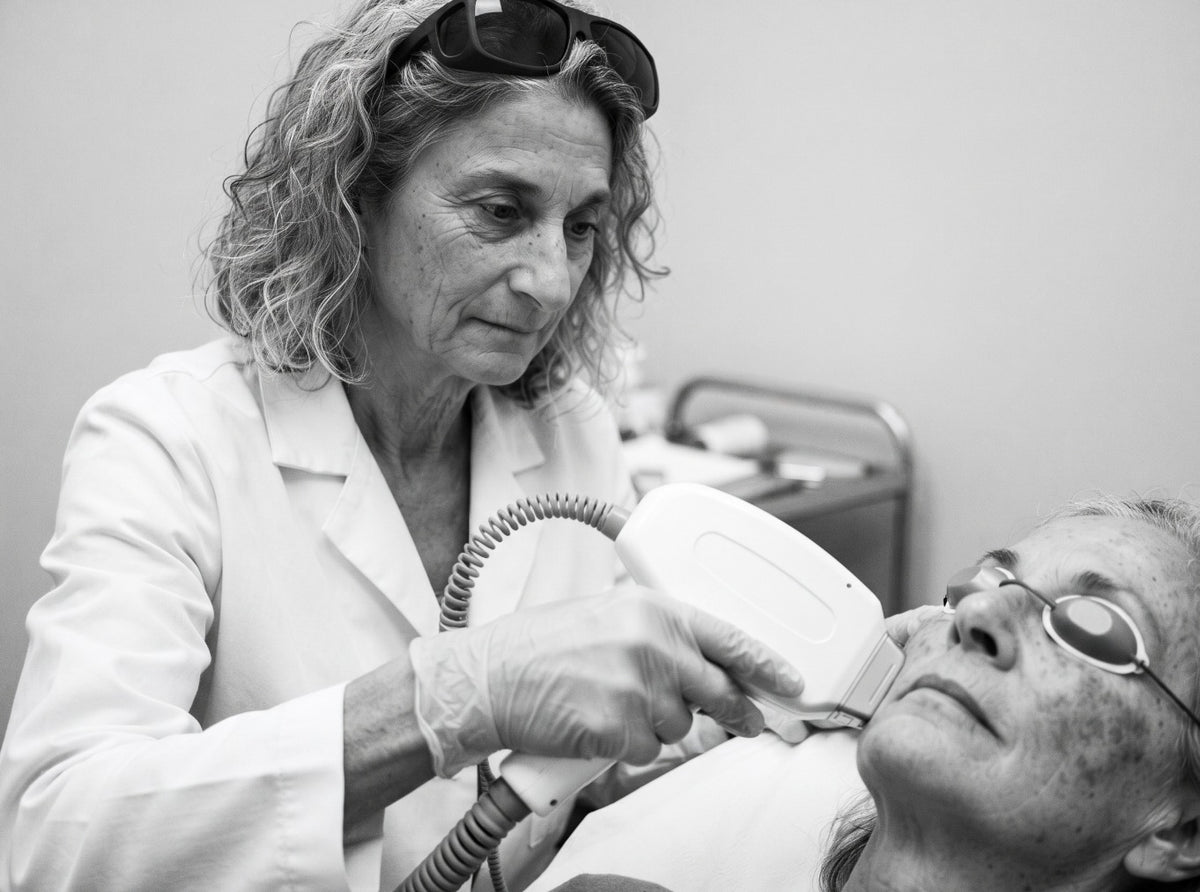
- Clears surface pigment faster than anything you can do at home
- Results visible within weeks, not months
- Carried out and supervised by a trained professional
Why it is not my first step
- Does not touch the enzyme, so production simply continues
- Two hundred to four hundred pounds a session, repeating indefinitely
- Redness, downtime, and a real risk of rebound darkening
It is last because it is extraordinarily good at the wrong half of the problem. It removes what the factory has already produced and leaves the factory running. That is not a failure of the machine, it is the design of the machine, and nobody explains it while you are handing over your card.
What about SPF?
You will have noticed it is not on the list. That is deliberate, and it is not because I have stopped believing in it. I have not. Wear it every day.
But SPF is not a treatment. It is a seatbelt. It reduces the signal arriving from outside and does absolutely nothing about a factory that was switched on twenty years ago and has been running quietly ever since. Which is exactly why so many women tell me, with real frustration, that they have worn sunscreen religiously for a decade and still watched new spots surface.
You were not doing it wrong. You were defending the door while the work was happening inside the house.
Where I would start
If you have faded the same spot more than once, you do not have a removal problem. You have a production problem, and you have been paying removal prices for it.
Start with the thing that reaches the enzyme, that your skin will tolerate every day for months, and that you will genuinely still be doing in eight weeks.
The 60 day promise. Use it twice a day for eight weeks. If your dark spots have not visibly faded, email us and we refund you in full. Keep the bars. Sixty days rather than thirty, because thirty is not long enough for pigment to move, and everyone selling you a thirty day guarantee on this knows it.
Click the button below to apply discount & check availability
Click here to see if it's still available →
Dr. Rebecca Mills writes on skin over fifty. This piece is based on years of clinic conversations with women who had already faded the same spot twice and wanted to know why it kept coming back.
Comments
10 comments on this article

smells amazing n lathers up really nicely, I leave it on a minute or two before washing off. spot on my cheek is going slowly. slowly being the word but its moving

Ok Im 2 weeks in and honestly nothing yet. Not saying it doesnt work just saying for anyone reading who expects a miracle. Will report back
Two weeks is far too early, Barbara, so nothing you are seeing is unusual. Do come back at week six.

grew up in the 60s slathered in baby oil on the beach every summer holiday, sunscreen wasnt a thing. my own fault really but reading that the damage was done decades before the spots showed up... anyway. ordered.

61. its not even the spots, my skin doesnt feel tight after washing anymore which I didnt know was a thing you could fix. 5 weeks

my GP told me years ago dont waste your money on creams they dont work. she wasnt wrong about the ones I was buying. this is the first time anyones explained the actual reason

Your GP gave you fair advice, Hilary. Most brightening creams do only address the surface, which is the wrong end of the problem.

bought for my mum shes 74. she rang me to ask what was in it bc her neighbour asked if shed been somewhere sunny. first compliment on her skin in years

rosacea + sensitive, everything stings, I mean everything. this doesnt. started once a day like it says then went to twice after about 10 days, no reaction so far. touch wood

Wish Id read this before I spent £1100. two rounds of laser, faded both times, back within the year both times. nobody ever explained why and I never thought to ask which is on me I suppose

Hang on so menopause makes these worse?? mine got noticeably worse around then and Ive never once had anyone connect the two. reading that alone was worth it
It comes up constantly in clinic and it surprises almost everyone, Susan. The hormonal shift is a genuine factor in why spots multiply in your fifties rather than earlier.
59f. Ive been sitting on my hands in photos for about 4 years now which sounds daft when I write it down. week 7 and theres a difference. my daughter said something at christmas before I did.